M Miller Mold Remediation
Hiawatha, IA · 52233 Attics · Basements · Crawl Spaces · Bathrooms

Mold Removal After Water Damage in Hiawatha, IA Near Me

Mold cleanup after a leak, flood or overflow, with moisture mapping to find growth in walls, floors and cabinets.

Inspection and Testing
Local Remediation Crews
Containment and HEPA Cleanup
Attics, Basements, Crawl Spaces

Mold doesn't need a flood. It needs material that stays wet for roughly 24 to 48 hours. After a pipe leak, a water heater failure, an overflowing tub or a storm, any drywall, carpet pad, insulation or wood that didn't dry fast enough is a candidate. Mold removal after water damage in Hiawatha, IA focuses on finding that growth and removing it once the water itself is gone.

Where mold hides after water damage

Surfaces often look dry within a day or two while the materials underneath stay wet. The places growth turns up later:

  • The back side of drywall and inside wall cavities, especially at the bottom plate
  • Carpet pad and tack strip, and the subfloor under them
  • Under and behind kitchen and bathroom cabinets, where toe kicks trap moisture
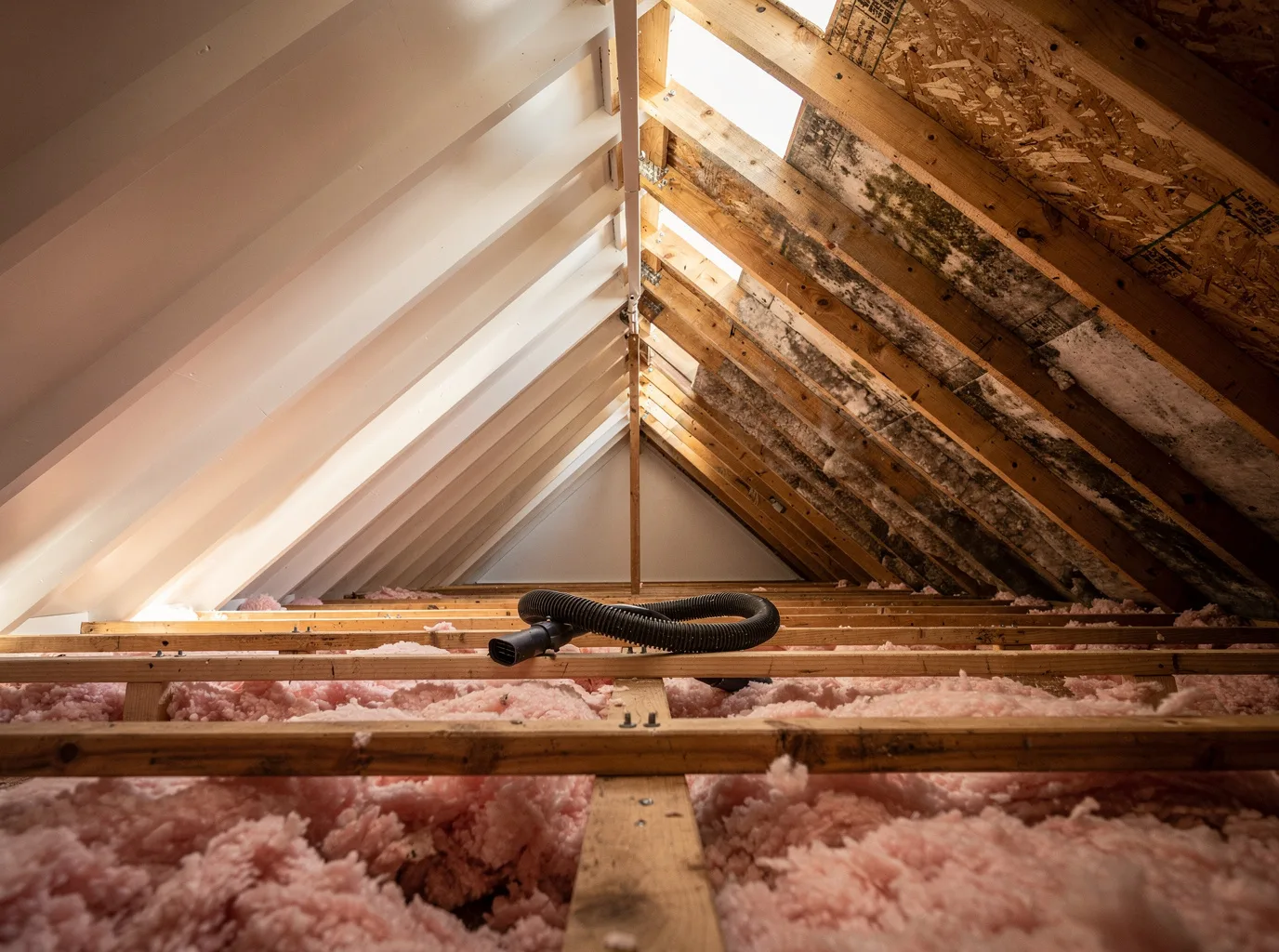
  • Fiberglass insulation in walls and ceilings below the leak
  • Hardwood flooring, which may cup and hide growth on its underside

Thermal imaging and a moisture meter find these spots without tearing everything open. Our page on mold inspection describes the tools.

What the crew does

This service picks up where the water cleanup ended, or where nobody did one. The crew maps moisture, sets containment around affected areas, and runs HEPA air scrubbers. Porous materials with growth come out: drywall cut at least a foot past the wet line, pad, insulation, sometimes cabinet backs. Framing and subfloor get HEPA vacuumed, cleaned and dried. Readings are rechecked until wood is back in the normal range. If the growth is mostly inside walls, see drywall mold removal.

Timing matters

The sooner materials are dried, the less there is to remove. Growth found a week after a leak is often limited to the surface. Growth found months later, behind a wall that was never opened, usually means more tear-out. If your leak happened a while ago and you were never sure it dried out, testing or an inspection is a reasonable first step.

Cost and insurance

Cost depends on how much material is affected, how long it stayed wet, and access. Homeowner policies vary a lot on mold. Many cover mold that results from a sudden covered event, like a burst pipe, and exclude mold from long-term leaks or humidity, often with a coverage cap. Read your policy, take photos before work starts, and keep moisture readings and reports. A clearance report at the end is useful for the file.

One practical point: if the water cleanup was done by someone else, ask for their drying logs. Readings taken during drying show which areas were slow to dry, and those are exactly where a mold crew should look first.

Call (984) 230-5534 and we will connect you with a local company that handles mold after a leak in Hiawatha, IA.
How it works

Four steps to a mold-free space in Hiawatha, IA

01

Tell us what you see

Staining on the ceiling, fuzz on the joists, a musty smell in the basement. Describe it and where it is.

02

Get a local crew lined up

We connect you with a mold company covering Hiawatha, IA that can inspect, take moisture readings and set the scope.

03

Containment and removal

The crew seals the area in plastic, runs HEPA air scrubbers, removes moldy material and cleans the framing.

04

Fix the source, confirm it

The leak or humidity problem gets addressed, and clearance testing can confirm the area before walls close up.

Coverage

Mold Remediation Across Hiawatha, IA

Mold inspection and removal across the neighborhoods and ZIP codes around Hiawatha, IA.

ZIP codes we serve

52233
Mold Removal After Water Damage in Hiawatha, IA

Mold remediation FAQs

Frequently asked questions about mold remediation

Questions we hear most about Mold Removal After Water Damage in Hiawatha, IA.

Talk to a real person
Can I remove mold myself?
<p>Small patches on hard surfaces, roughly under 10 square feet, are usually a homeowner job: wear gloves, an N95 and eye protection, scrub with detergent and water, and dry the area fully. Past that size, or if growth is inside walls, in the HVAC system or on drywall that's soft, a pro with containment and a HEPA scrubber makes more sense. If the area keeps coming back, the moisture source is still there, and cleaning alone won't fix it.</p>
Is black mold dangerous?
<p>We can't give medical advice, and neither can the crew. Health questions about mold exposure should go to your doctor, especially for infants, older adults, or anyone with asthma or a weakened immune system. From the building side, any heavy dark growth on drywall or wood gets the same careful handling: containment, misting, bagging inside the work area and HEPA cleanup. Our <a href="/services/black-mold-removal">black mold removal</a> page explains how crews handle it.</p>
Do I need mold testing or just an inspection?
<p>If you can clearly see growth, an inspection to find the extent and the moisture source is usually enough, since the plan is the same no matter the species: remove it and fix the water. <a href="/services/mold-testing">Lab testing</a> helps when you smell mold but can't find it, when you need documentation for a sale or a landlord, or when you want proof a cleanup worked. Many people combine both in one visit.</p>
What causes mold in the attic?
<p>Usually warm, damp air from the house condensing on the cold roof deck. The common culprits are bathroom fans venting into the attic, soffit vents blocked by insulation, too little roof venting, and air leaks around light fixtures and the hatch. Roof leaks cause spots near chimneys and vents. The fix is cleaning plus airflow changes, covered on our <a href="/services/attic-mold-removal">attic mold</a> page.</p>
Why does mold keep coming back after I clean it?
<p>Because the water is still there. Mold returns in the same spot when a hidden leak, high humidity or condensation keeps that surface damp. Bleach also tends to whiten the stain on porous surfaces without removing growth underneath. Find the source with a moisture meter, fix it, then remove the growth properly. Our <a href="/services/mold-prevention">mold prevention</a> page covers the moisture checks that matter most.</p>

Book mold remediation

Seeing Mold in Hiawatha, IA? Call now.

Tell us what you're seeing and we line you up with a mold company covering Hiawatha, IA. Scope and pricing are worked out after the walkthrough. (984) 230-5534.

Call (984) 230-5534 Services